

Where Performance Means Support
“In undergrad, I remember the struggle to find a fitting mentor. You’re often asked to figure it out without context and run advanced statistics without training.
We built OnTrac as an accelerator. Highly motivated students still do the work. We’ve just increased access. Reduced guesswork. We owe part of that to our tech, but most of that to our team.
I’m excited to see students get the mentorship they deserve.”
Andrew Whitcomb, Founder of OnTrac
MD Candidate (Washington University School of Medicine in St. Louis)

How It Works
Application & Selection
We select applicants across the Nation and from diverse backgrounds. Successful applicants show passion and grit.
Matching
Matriculants are matched with a principal investigator (PI) and student team. Our leadership and the entering student finalize this decision.
Mentorship
Though remote, our students remain tightly integrated with weekly peer-mentor calls and regular investigator-led video meetings.
Real Output
Our students are ambitious and driven. Combined with unwavering peer and PI support, students often publish.
Leadership
In addition to piloting their own projects through to first authorship, roughly half of our students assume formal leadership roles. At OnTrac, these positions aren’t just résumé lines; they're catalysts for our future leaders in medicine.
Next Steps
Experience, authorship, and faculty-backed letters prepare OnTrac students to enter top medical schools and match to competitive residency programs.
A Growing Community
Because OnTrac is remote, students carry this network with them; through premed, medical school, and even residency. One day, some OnTrac students may even become OnTrac PIs.
Our Areas of Focus
Entitled "OnTRaC", or Oncology Trainee Research Collaborative, our program primarily focuses on all forms of data-driven cancer research. Our current mentorship is especially strong in public health and medical oncology. However, medical school and many residency programs have become extremely competitive. In light of putting our students first, we will consider expanding OnTrac's mentorship on a case-by-case basis. We exist to support students in their goals.
Public Health

Public health research is the study of population well-being including preventative medicine, health inequalities, and quality improvement. Our students paired with a public health mentor will analyze large, multi-institutional datasets to inform cancer care.
Radiation Oncology
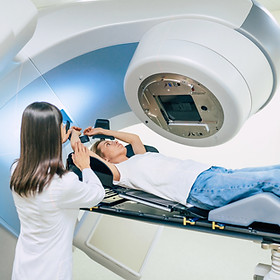
Radiation oncology is the treatment of localized cancer using x-rays, proton beams, and other forms of radiation. These interventions are often part of multi-modal treatments that offer cancer patients a cure, though they can also be used to manage symptoms like pain or blockage. For example, those students paired with Rad Onc may study the effects of various dosing schedules on long-term patient outcomes.
Medical Oncology
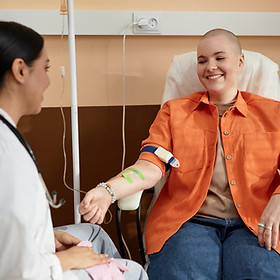
Medical oncologists treat cancer with drugs like chemotherapy, targeted therapy, and immunotherapy. OnTrac students in our medical oncology division will study cancer outcomes in various contexts, from epidemiology of rare malignancies to hospital-level outcomes using novel immune therapy regimens.
Expanded Offerings

We intend to expand into other fields, cancer adjacent or not, based on student preference. Our priority at OnTrac is to bolster student success, not to force trainees into oncology. Examples of other fields that we would strongly consider expanding into include surgical oncology, orthopedic surgery, palliative care, neurosurgery, dermatology, plastic surgery, or otolaryngology.
